

Affordable, Doctor-Guided and Safe NAD+ Injection Vials in Albuquerque
FDA 503B-Sourced NAD+ Vials in Albuquerque
New Pricing as Low as $3 an Injection
💉
1000mg Vial as Low as $149
💉
No Subscription Required
💉
New Pricing as Low as $3 an Injection 💉 1000mg Vial as Low as $149 💉 No Subscription Required 💉
At Modern Wellness in Albuquerque, we offer a doctor-guided NAD+ vial program for patients who want a safer, medically guided way to support cellular energy, healthy aging, recovery, and vitality. Our focus is not hype. Our focus is quality sourcing, proper screening, individualized dosing, and patient education.
NAD+, short for nicotinamide adenine dinucleotide, is a molecule involved in cellular energy metabolism, mitochondrial function, DNA repair signaling, and many pathways associated with aging biology. Research shows that NAD+ biology is strongly connected to aging, metabolism, inflammation, and cellular repair. A 2026 systematic review found that raising NAD biomarkers in humans demonstrated clinical benefits for metabolic, vascular, and mental performance.
Why NAD+ Quality and Sourcing Matter
Not all NAD+ products are the same. This is especially important with injectable products.
The FDA has specifically warned that some compounders have used food-grade NAD+ ingredients to make sterile injectable products. FDA noted that food-grade ingredients may carry contamination risks, including microbes and endotoxins, and reported adverse events after injectable NAD+ use.
The "gray market" for unregulated NAD+ poses severe health risks because these products are often labeled "for research use only" (RUO) and “not for human consumption” to bypass the rigorous purification and safety standards required for human consumption. Using these substances can lead to permanent metabolic damage, organ toxicity from industrial solvents, and life-threatening infections due to a lack of sterility.
Manufacturing peptides requires toxic chemicals like Trifluoroacetic acid (TFA) and Dimethylformamide (DMF). Pharmaceutical-grade medication undergoes expensive purification to remove these, but research-grade products often contain high residual levels. TFA is a "forever chemical" that can accumulate in the body, with studies indicating potential long-term risks to liver and kidney function, as well as reproductive toxicity.
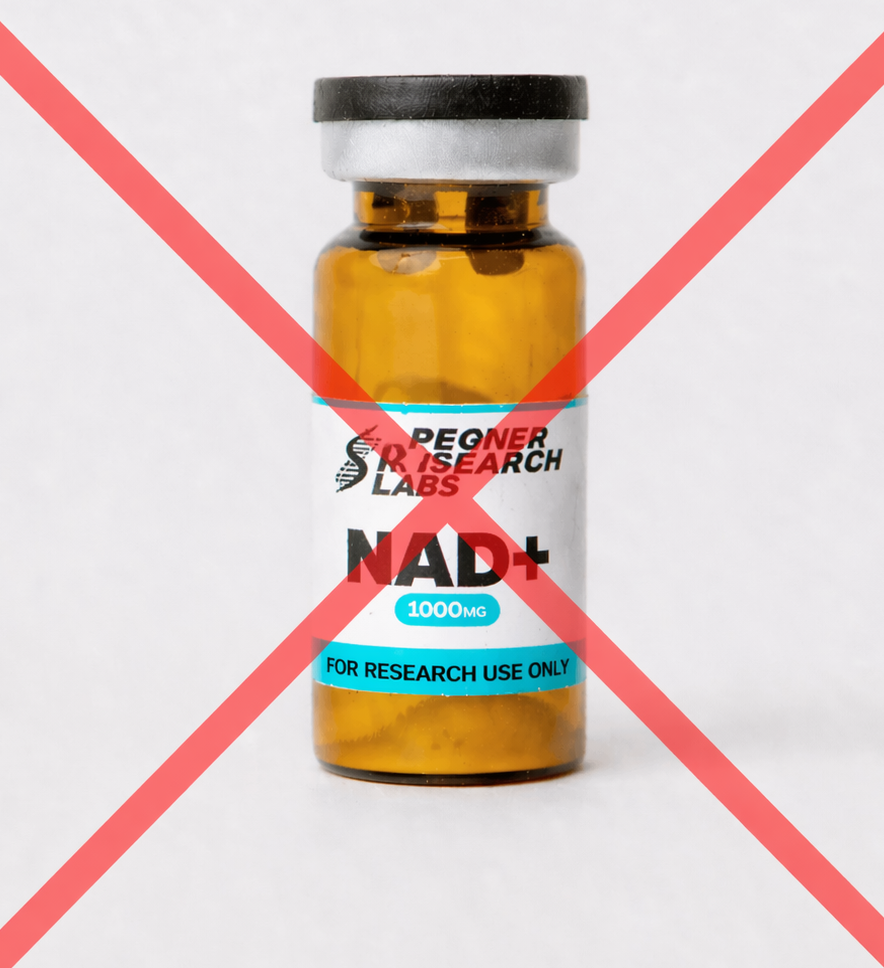
That is why our clinic emphasizes 503B-sourced sterile NAD+. Under federal law, 503B outsourcing facilities are a specific category of compounders that prepare sterile drugs, must comply with current good manufacturing practice requirements, are inspected by FDA on a risk-based schedule, and must meet conditions such as adverse-event reporting and product reporting.
NAD+ Injection Dosing: Why We Use a Loading Phase
NAD+ is not something the body stores forever. It is constantly being used, recycled, and depleted through normal cellular activity. As we age, NAD+ levels tend to decline, especially in the setting of oxidative stress, inflammation, poor sleep, metabolic dysfunction, alcohol use, chronic stress, and age-related cellular damage.
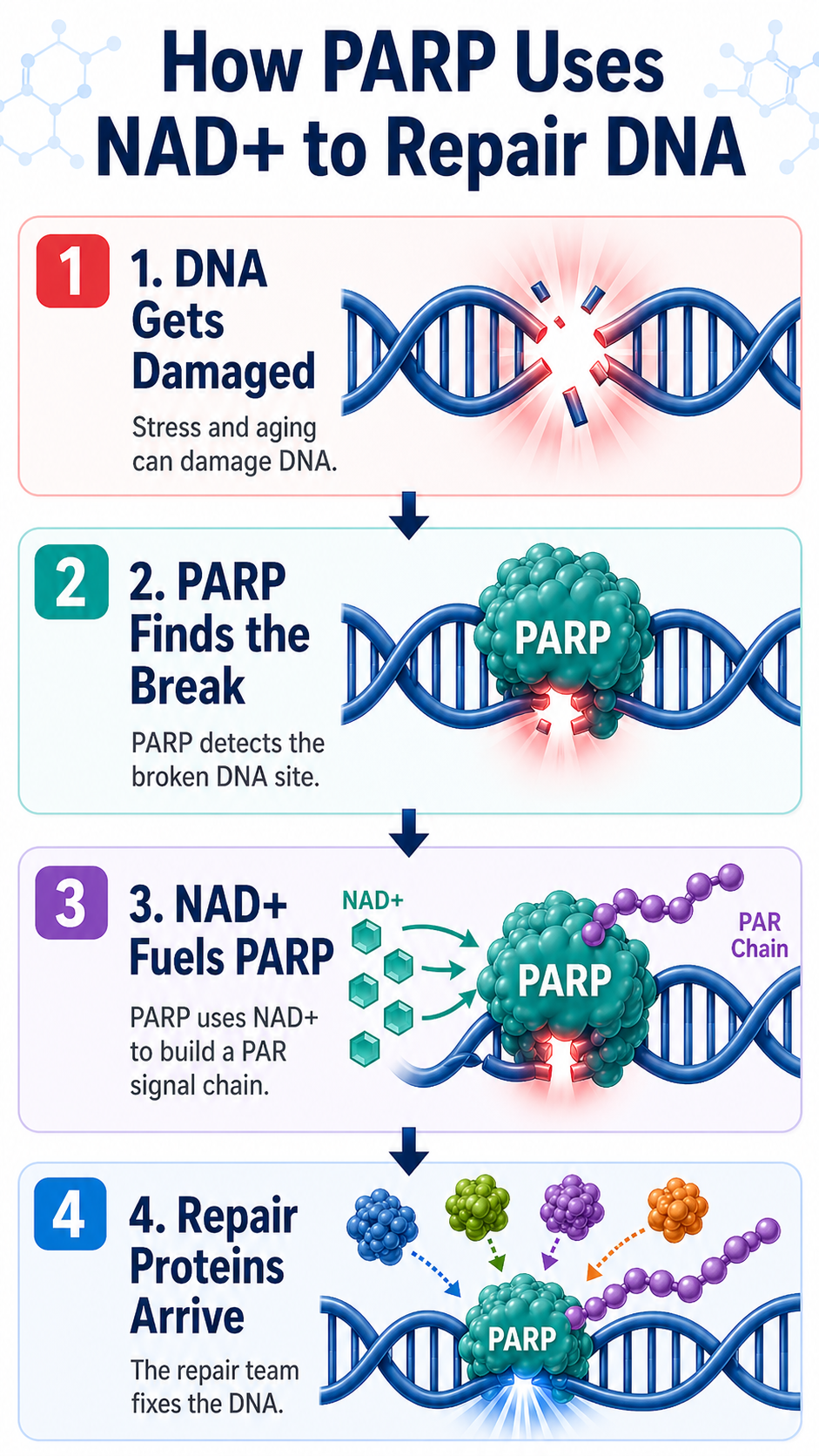
One important reason NAD+ declines over time is that the body uses NAD+ during cellular repair reactions. When oxidative stress and DNA damage accumulate with age, the body activates repair enzymes such as PARP, which uses NAD+ as a substrate during DNA repair. If this repair demand stays elevated over time, NAD+ can be consumed faster than the body can replenish it. Human tissue research has shown that NAD+ levels decline with age and that PARP activity may contribute to NAD+ depletion in aging tissue.
Another major enzyme involved in age-related NAD+ depletion is CD38, a NAD-consuming enzyme that appears to increase with aging. Research has shown that CD38 expression and activity rise with age and that CD38 is responsible for age-related NAD+ decline and mitochondrial dysfunction in preclinical models.
For this reason, we do not view NAD+ injections as a “one-and-done” treatment. Many patients need an initial loading phase to help rebuild depleted NAD+ stores, followed by a maintenance plan based on age, health status, goals, and response.
Why Loading NAD+ Matters
By midlife, NAD+ levels may be substantially lower than they were in youth. Some commonly cited clinical estimates suggest that byaround age 40, NAD+ availability may be dramatically reduced, and by age 60, some individuals may have only a fraction of the NAD+ activity they had when younger.
We usually recommend that patients complete at least two to four vials over a 6 to 12 -week period as an initial loading program. Some patients, especially older adults or those with more significant age-related fatigue, metabolic stress, chronic inflammation, poor recovery, or long-standing health issues, may need 12 weeks or more before transitioning into maintenance.
Our “Ease-In” NAD+ Injection Schedule
NAD+ should not always be started aggressively. Too much NAD+ at one time may cause temporary side effects, especially in sensitive patients. These may include nausea, headache, flushing, chest tightness, stomach cramping, or a generally uncomfortable feeling. These effects are commonly reported with higher-dose or faster IV NAD+ infusions, which is one reason we prefer a slower, more adjustable injection-based approach. A 2026 review of IV NAD+ notes clinician and patient-reported side effects such as nausea, malaise, sweating, stomach cramping, and headache, and notes that slower infusions taking many hours are often used to reduce discomfort.
At Modern Wellness, we generally prefer to let patients ease into NAD+ dosing with easy to administer subcutaneous (SC) injections so the body can adapt.
Typical NAD+ Loading Schedule
Week 1 - 20mg two times a day
Week 2 - 50mg once per day
Week 3 - 100mg every other day*
Week 4 to 6 same as Week 3
*If tolerated. Typically, older or weaker individuals can tolerate higher doses
A vial typically lasts about 3 weeks during the loading phase, depending on the prescribed dose, vial concentration, and the patient’s individualized protocol.
Pricing
Only $249 for a 1000mg vial
Get your 1st 1000mg vial at $149 if you buy 3: that’s $3 for a 20mg injection
Maintenance Dosing
After the loading phase, maintenance depends on the patient.
A younger, healthier patient may need less frequent support. An older patient, or someone with more age-related depletion, chronic inflammation, metabolic stress, or higher performance demands, may need a more consistent schedule.
A common maintenance plan is:
One vial every 3 months, typically used as a 3-week course
However, maintenance dosing is individualized. Some patients do best with seasonal NAD+ support. Others may benefit from more frequent courses depending on age, symptoms, health goals, and clinical response.
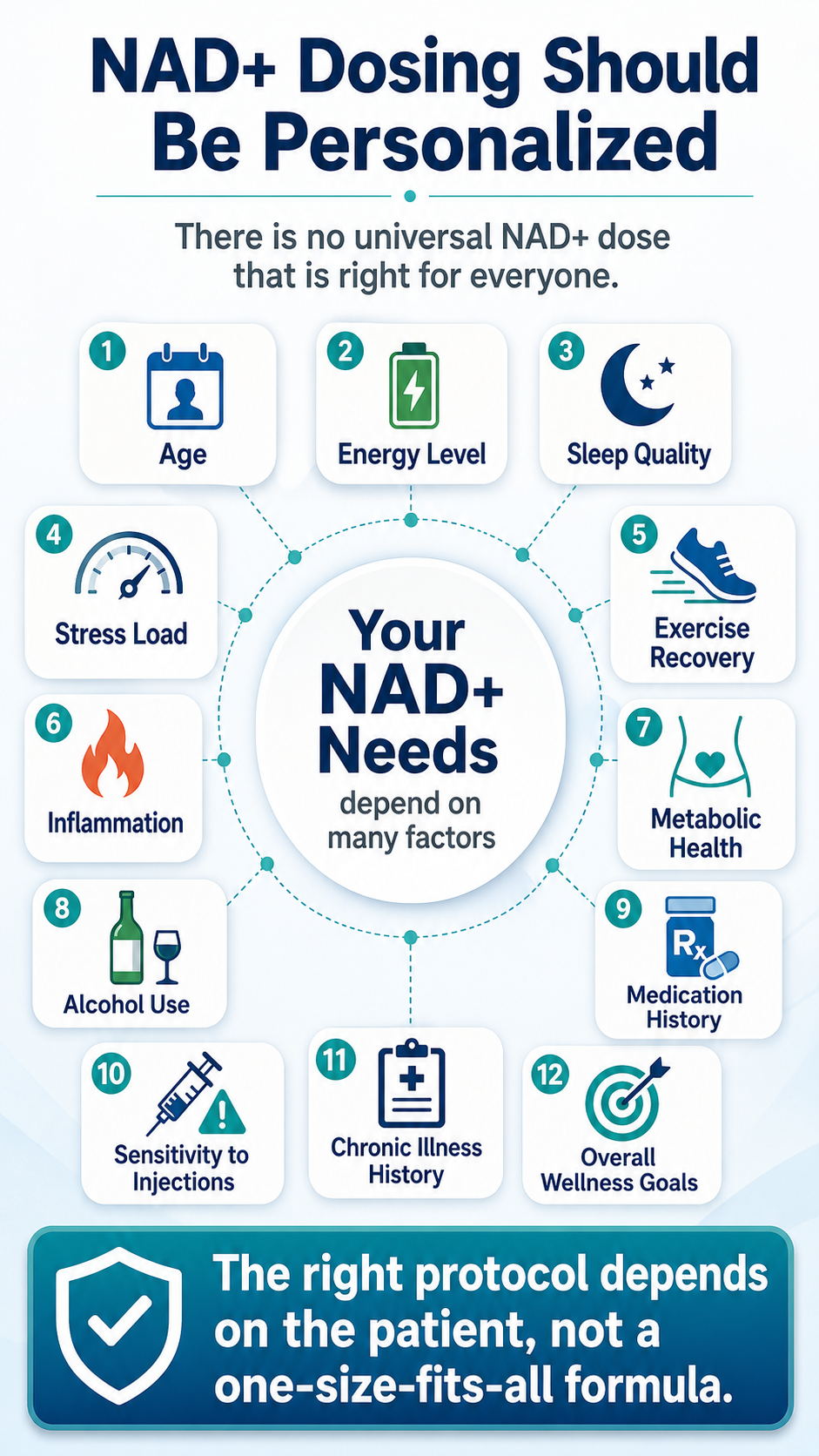
Why We Personalize NAD+ Dosing
There is no universal NAD+ dose that is right for everyone. NAD+ needs can vary depending on:
age
energy level
sleep quality
stress load
exercise recovery
inflammation
metabolic health
alcohol use
medication history
sensitivity to injections
chronic illness history
overall wellness goals
Our goal is not to give the highest dose possible. Our goal is to find the lowest effective dose that helps support cellular energy, recovery, and healthy aging while keeping the patient comfortable.
Why We Prefer NAD+ Injections Over Oral NAD+ Precursors
NAD+ oral supplements are not actually NAD+. They are precursors, such as NR or NMN, since NAD+ is unstable and is broken down in the digestive process. These precursors must first digest, absorb, metabolize, and convert through several biochemical steps before they can contribute to the NAD+ pool.
That does not mean oral precursors are useless. Human studies show that oral NR and NMN can increase NAD-related biomarkers. However, oral supplements have important limitations. After swallowing an oral NAD+ precursor, it must pass through the digestive tract and then through the liver before reaching the rest of the body. This is known as the first-pass effect.
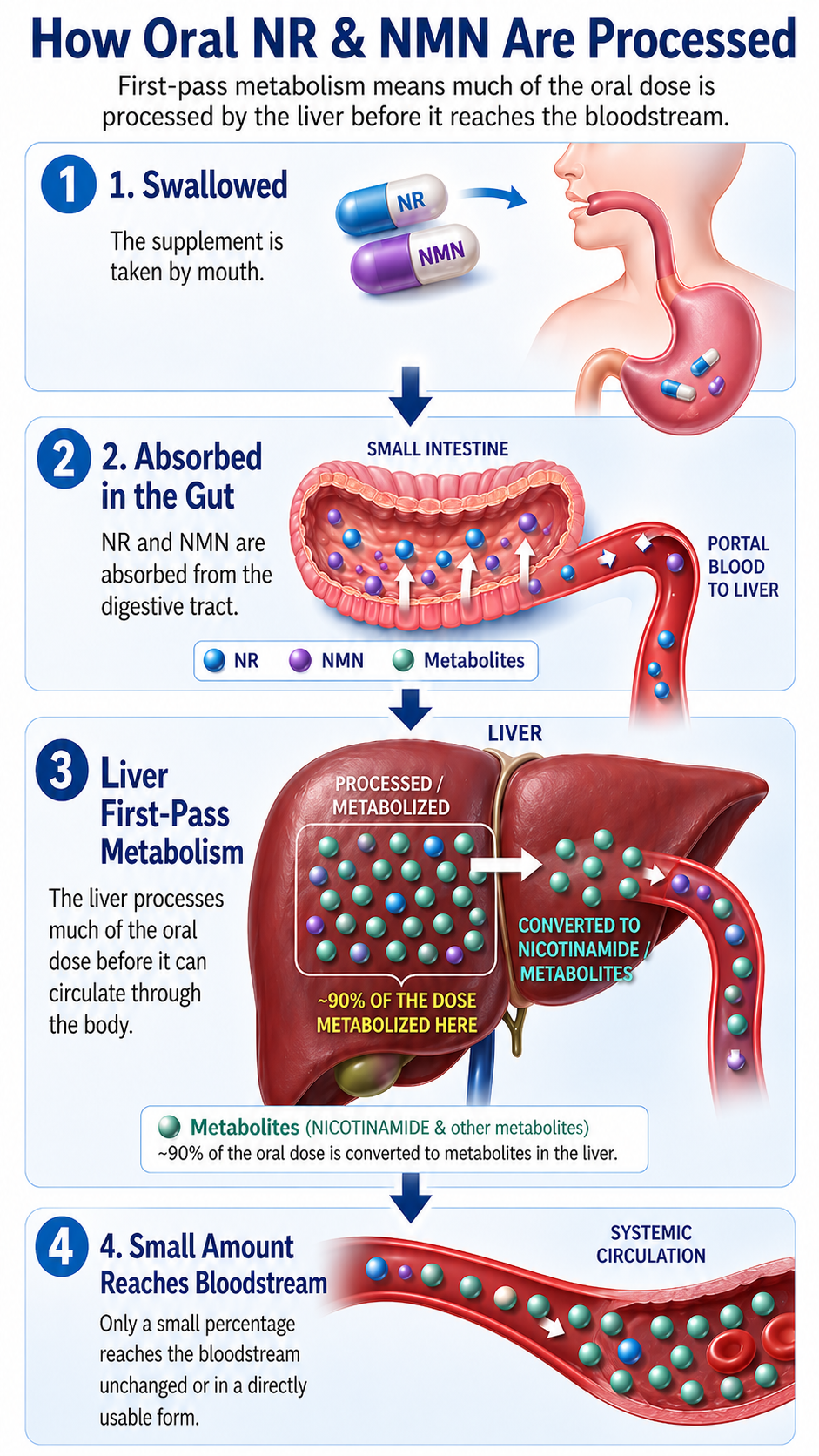
During first-pass metabolism, the liver processes a large portion of orally absorbed compounds before they circulate systemically. Some pharmacokinetic estimates suggest that only a small percentage, sometimes cited in the range of approximately 2% to 9%, may make it past first-pass processing in a form that is available for systemic use. The exact number can vary depending on the compound, dose, formulation, gut absorption, liver metabolism, and the individual patient.
NAD+ injections take a different approach. Instead of relying on digestion, intestinal absorption, and first-pass liver metabolism, injections deliver NAD+ by a parenteral route, bypassing the gastrointestinal system. For many patients, this makes dosing more direct, easier to track, and easier to personalize.
At Modern Wellness, we prefer NAD+ SC injections because they allow us to:
bypass the digestive tract
avoid much of the first-pass effect through the liver
provide an affordable, effective delivery of NAD+ into the body
use smaller, repeatable doses
adjust dosing based on age, goals, and sensitivity
better personalize protocols based on patient response
combine NAD+ with a broader wellness plan
use provider-guided protocols instead of random online supplements
source from a safety-focused 503B sterile compounding pharmacy
For patients seeking a practical, medically guided NAD+ strategy, injections often provide the best balance of direct delivery, convenience, dose control, and safety-focused clinical oversight.